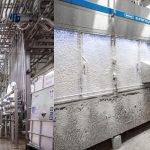

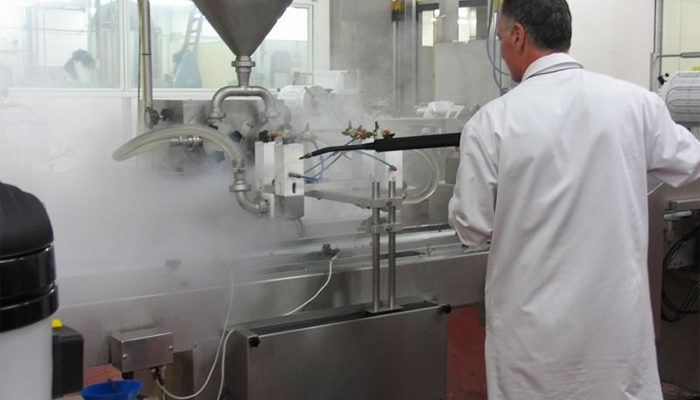
Cleaning requirements in food processing plants are generally higher than in any other industry. Alongside product quality, maintaining hygiene is essential to avoid violations of food safety regulations. This is why the use of pressure washers and steam cleaners in the food industry is increasingly encouraged.
From small laboratories to large factories, these equipment are the most suitable tools for achieving fast and easy thorough cleaning. They enable the cleaning and sanitization of machinery, tanks, floors, surfaces, and environments where food is processed and can be easily contaminated. Examples include meat, dairy, wine, fruits, vegetables, flour, and grains.
Daily cleaning allows significant time and cost savings by eliminating operational disruptions caused by accidents and unforeseen maintenance tasks. It enhances safety and satisfaction in the workplace environment, as well as the quality and productivity of the products.
Pressure washers for the dairy industry
Starting with some preliminary considerations, the choice of a pressure washer depends on the specific usage environment. In fact, you can choose between a cold-water pressure washer and a hot-water pressure washer. To combat the formation of bacteria, germs, and other organic contaminants, a hot-water pressure washer is more suitable. However, it should be considered if the machine needs to be used in a confined space and requires a smoke extractor.
The role of pressure washers in the dairy industry
Cleaning, sanitation, and disinfection are even more crucial in the dairy industry, where the environment and equipment used must be thoroughly and regularly cleaned. This is to comply with strict regulations and reference standards. In fact, a professional pressure washer is essential for saving time and money, as well as being the most suitable tool for effectively removing bacteria from surfaces and eliminating dirt and mold from processing waste.
The benefits of high-pressure water washers
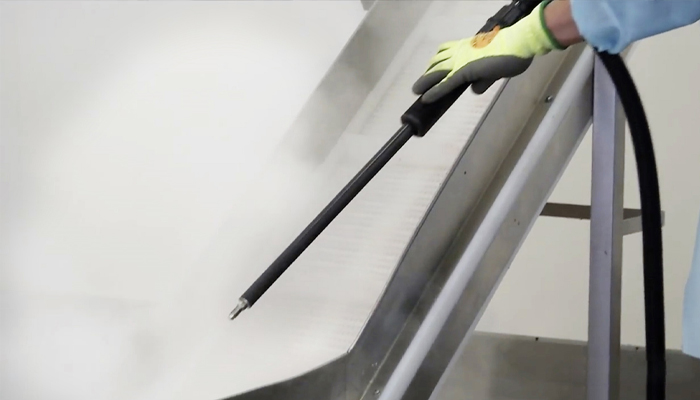
In reality, high-pressure water is expelled through a pressure washer, which helps slow down and eliminate the growth of microorganisms and parasites that can affect the health and quality of milk and its by-products. The milk processing process can generate two types of contaminants: organic and inorganic. The organic component relates to fats, proteins, and sugars, while the inorganic component relates to lime and other minerals present in milk. However, both components need to be removed on a daily basis wherever they accumulate.
To operate in larger environments, such as milk extraction areas, a high-pressure water washer can be used. On the other hand, for easy maneuverability between workstations in the laboratory, a more compact pressure washer can be chosen.
Read more >>>CLEANING APPLICATIONS IN FOOD INDUSTRY
STEAM CLEANING IN THE FOOD INDUSTRY
When deep cleaning doesn’t meet the requirements, we can turn to a steam cleaning solution.
The high temperature produced by steam, reaching up to 185°C, can effectively kill microorganisms present in the organic residues of food waste (which cannot survive above 75°C). This allows for reaching even the smallest crevices and gaps where water cannot reach or may cause damage, such as electrical components, motors, heat exchangers, etc.
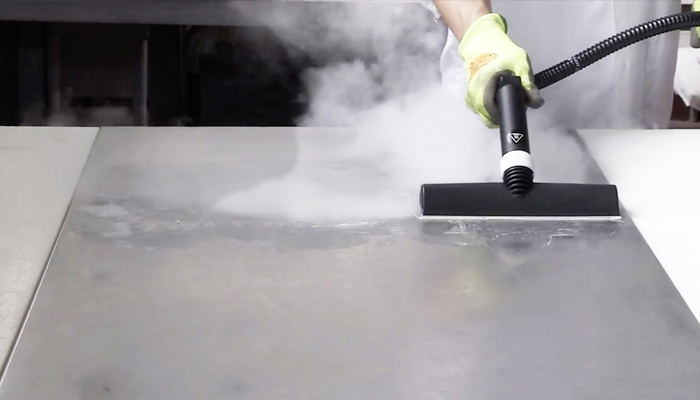
Furthermore, steam eliminates allergens and reduces bacterial load on the work surfaces. It removes biofilms, especially those related to fats and oils, and prevents the formation of foam and detergent residues.
Hot steam cleaners help reduce cleaning time. This is because surfaces and equipment dry immediately and are ready for the next task. In addition to time savings, steam cleaning also saves water. By reducing water usage and waste by up to 90%.
Lastly, it achieves up to 95% savings in cleaning agents and other chemical substances.